A missing tooth can change more than the way your smile looks. You may begin chewing on one side, avoid certain foods, or feel less comfortable speaking and laughing freely. When comparing partial dentures versus dental bridges, the best choice is rarely about finding one “better” option. It is about choosing the solution that fits your oral health, the number and location of missing teeth, your lifestyle, and your goals for comfort and confidence.
Both treatments can restore function and help protect your smile from the effects of missing teeth. The right recommendation begins with a careful exam, a conversation about what matters to you, and an honest look at the condition of your remaining teeth and gums.
Partial Dentures Versus Dental Bridges: The Main Difference
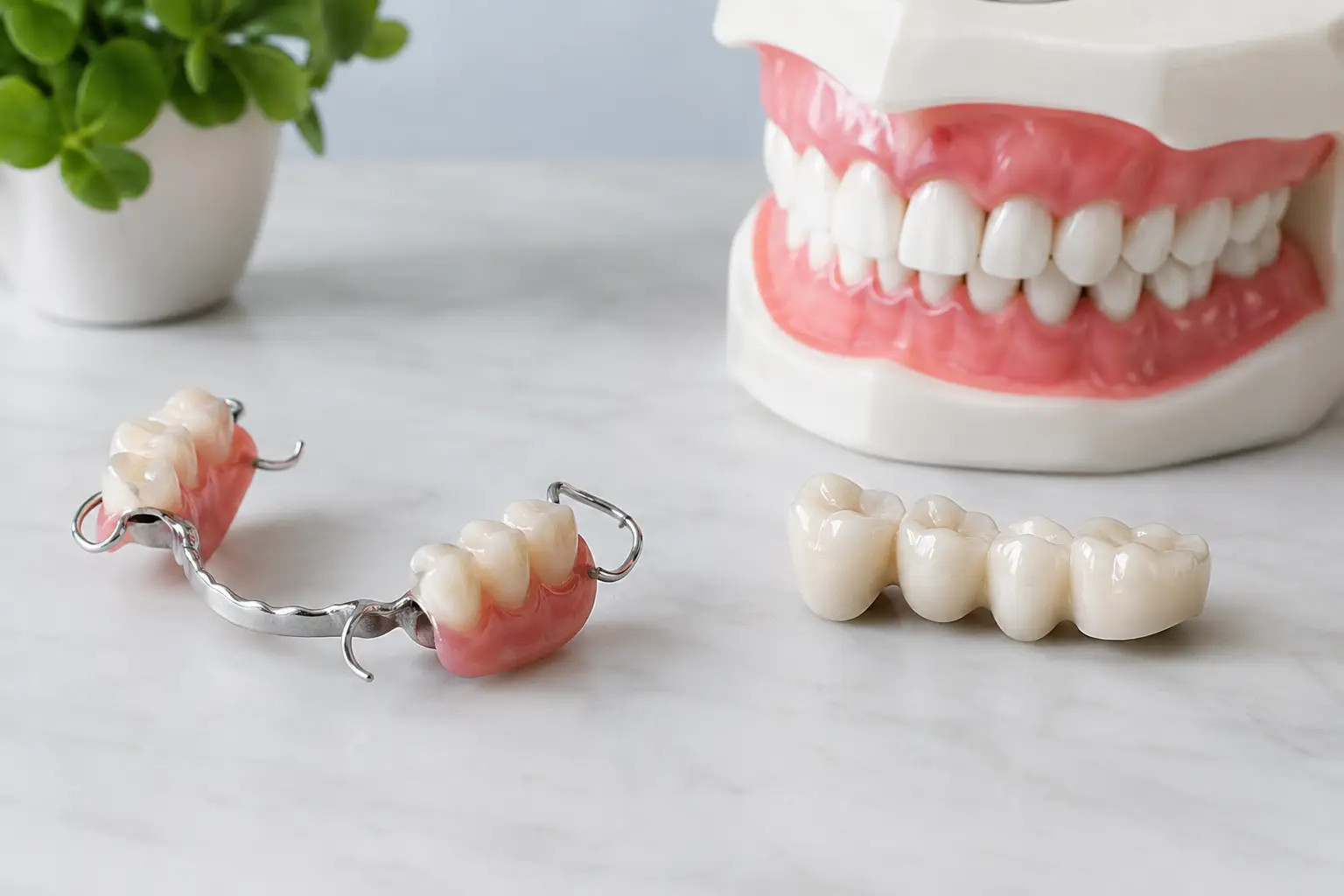
A partial denture is a removable appliance that replaces one or more missing teeth. It typically includes replacement teeth attached to an acrylic base or a lightweight metal framework. Depending on the design, it may use clasps that rest around natural teeth to help keep it stable.
A traditional dental bridge is fixed in place. It replaces a missing tooth or teeth by connecting a custom restoration to the natural teeth on either side of the gap. Those neighboring teeth are usually prepared for crowns that support the replacement tooth between them. Once cemented, a bridge stays in place and is cared for much like natural teeth.
That removable-versus-fixed distinction affects nearly every part of the decision, from daily care and feel to cost and long-term planning.
When a Partial Denture May Be the Better Fit
Partial dentures are often a practical choice when several teeth are missing in different areas of the mouth. Because one appliance can replace multiple teeth, it can be more efficient than placing separate bridges across several gaps. It may also be recommended when the teeth next to a gap are healthy and you would prefer not to reshape them for crowns.
Another benefit is that a partial denture can usually be adjusted or repaired if your needs change. If another tooth is lost later, in some cases the appliance may be modified rather than completely replaced. This can be helpful for patients whose dental needs are still evolving.
Partial dentures do have an adjustment period. They can feel bulky at first, and speaking or eating may require practice. Some patients notice that the appliance moves slightly during meals, particularly if it does not fit closely or if the supporting teeth and gums have changed over time. A well-designed, properly fitted partial denture should feel secure, but it will not feel exactly like natural teeth.
Removable appliances also require a consistent routine. A partial denture should be taken out daily for cleaning and should not be worn while sleeping unless your dentist gives you different instructions. Your gums, tongue, and remaining teeth still need gentle daily cleaning as well.
When a Dental Bridge May Be the Better Fit
A dental bridge may be an excellent option when one tooth, or a small group of neighboring teeth, is missing and the teeth on either side of the space are strong enough to support it. Many patients appreciate that a bridge is fixed. There is no need to remove it at night, and it generally feels more natural during everyday activities such as speaking and eating.
Because a bridge fills the gap, it can help prevent nearby teeth from shifting toward the empty space. It also restores the ability to chew more evenly, which may reduce strain on the remaining teeth. For a visible missing tooth, a carefully crafted bridge can provide a natural-looking improvement in the appearance of your smile.
The trade-off is that a traditional bridge relies on neighboring teeth. Even if those teeth do not have large fillings or crowns already, they must be reshaped to support the bridge. When the adjacent teeth already need crowns because of damage or extensive decay, that preparation may make practical sense. When they are completely healthy, some patients prefer to consider alternatives that preserve more natural tooth structure.
A bridge also requires detailed cleaning beneath the replacement tooth. Brushing alone cannot reach every area under the bridge, so your dentist may recommend a floss threader, specialized bridge floss, or another cleaning aid. Without good home care and regular professional visits, plaque can collect near the supporting crowns and contribute to gum inflammation or decay.
Comfort, Appearance, and Everyday Function
For many patients, comfort is the deciding factor. A bridge is stable because it is cemented in place, which can make chewing and speaking feel more predictable. A partial denture rests on the gums and is supported by remaining teeth, so it may take more time to adapt to its feel and movement.
Appearance depends on the quality of the restoration, the location of the missing teeth, and the design selected for your smile. Both options can be made to blend naturally with your surrounding teeth. With partial dentures, clasps may be visible in certain areas, although modern designs can often minimize their appearance. A bridge does not have removable clasps, but its cosmetic result depends on matching the shape, shade, and contours of your natural teeth.
Food choices can matter, too. Patients with a bridge can usually return to a broad range of foods after an adjustment period, though very hard or sticky foods may still pose a risk. Patients with partial dentures may need to begin with softer foods and learn to chew on both sides of the mouth. Small bites and patience can make the transition much easier.
Cost and Long-Term Value
The cost of partial dentures and dental bridges varies based on the materials used, the number of teeth being replaced, supporting treatment needs, and your insurance benefits. A partial denture often has a lower initial cost when multiple teeth are missing. A bridge may have a higher upfront investment, particularly when crowns, periodontal care, or other preparation is needed.
Initial cost should not be the only consideration. A bridge may need replacement if its supporting teeth develop decay, fracture, or gum disease. A partial denture may need relining, adjustment, or replacement as your gums and jawbone naturally change shape. Neither option is a permanent, maintenance-free solution, but both can serve patients well with attentive care.
It is also wise to discuss the long-term health of the teeth that will support your restoration. If gum disease is active or a supporting tooth has a guarded prognosis, treating those issues first may lead to a more predictable result.
What About Dental Implants?
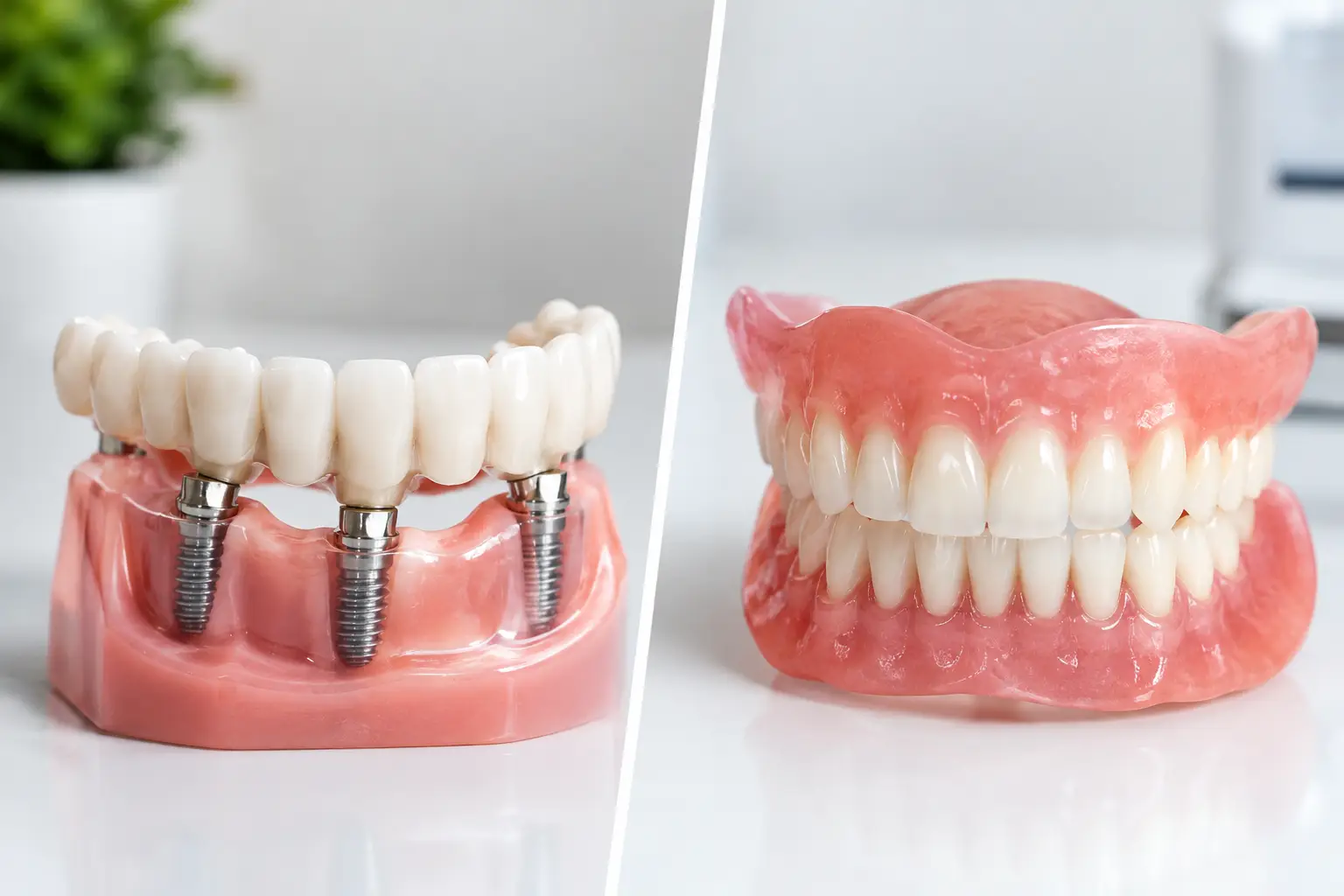
Dental implants are another tooth-replacement option worth discussing. An implant replaces the tooth root with a small post placed in the jawbone, then supports a crown, bridge, or denture. Unlike a traditional bridge, an implant-supported restoration does not require reshaping neighboring teeth. It can also provide added stability for patients who find a removable partial denture difficult to wear.
Implants are not right for every person. Bone volume, gum health, overall medical history, healing time, and budget all play a role. For some patients, a bridge or partial denture is the most appropriate treatment now, while an implant may be part of a future plan.
How to Make a Confident Decision
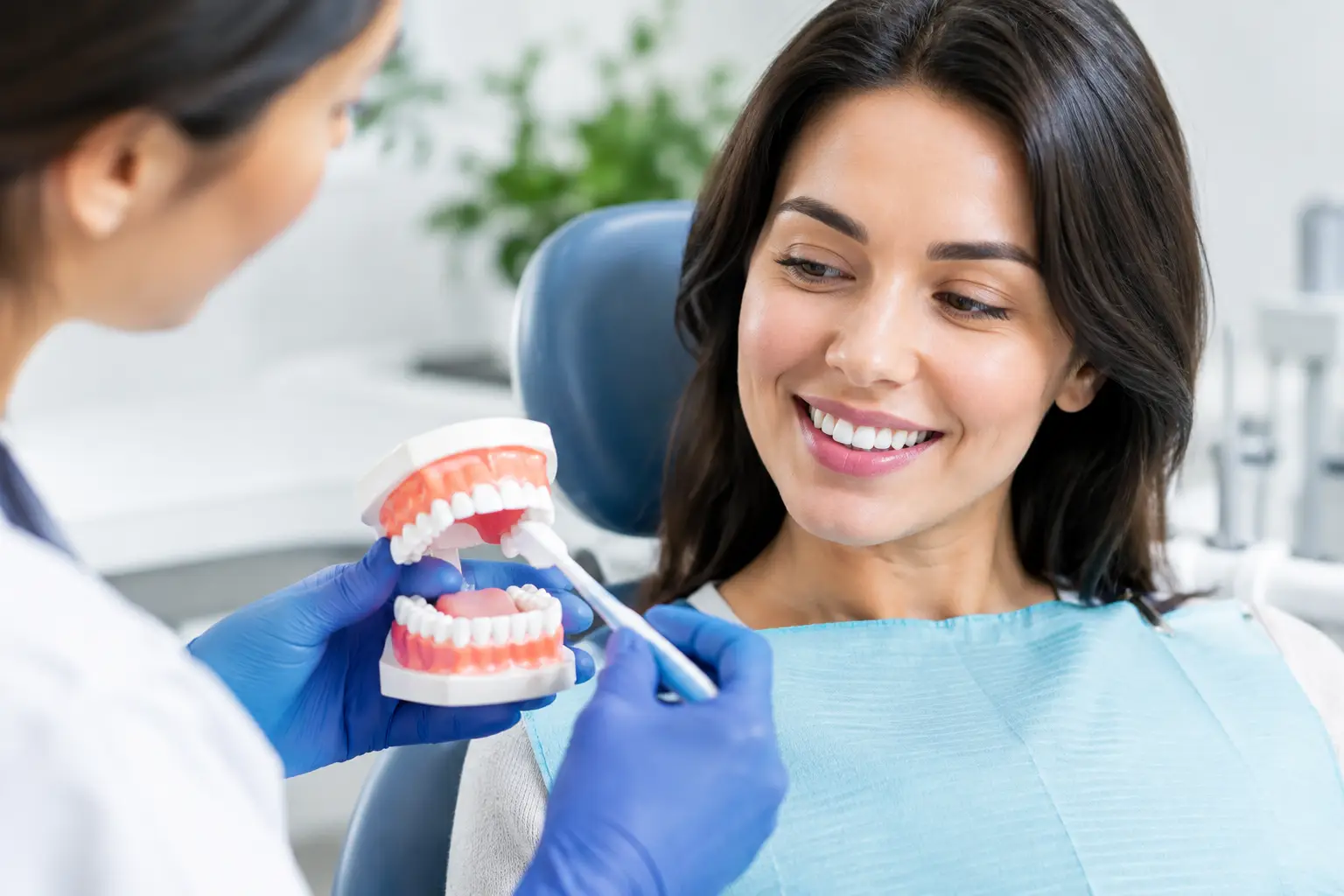
The most helpful question is not simply, “Which costs less?” It is, “Which option best supports my health and daily life?” Your dentist will evaluate the number and position of missing teeth, the health of your gums, the strength of nearby teeth, your bite, and any signs of grinding or clenching. Just as importantly, they should listen to concerns about appearance, comfort, treatment time, and budget.
At Alliance Dental, that conversation is designed to be clear and unhurried. You deserve to understand why a particular option is being recommended and what care it will require before you move forward.
Missing teeth deserve thoughtful attention, but you do not need to make the decision alone. A personalized evaluation can turn uncertainty into a plan that helps you eat comfortably, protect your remaining teeth, and smile with greater ease.