A missing tooth can change more than the way a smile looks. It can make a favorite meal harder to enjoy, affect speech, and leave you feeling self-conscious in photos or conversations. Dentures for missing teeth can restore function and confidence, but the right choice depends on how many teeth are missing, the health of your gums and jawbone, and what will feel most comfortable in daily life.
Modern dentures are designed to look more natural and feel more secure than many people expect. At Alliance Dental, the conversation starts with listening: what you are experiencing, what you want to be able to do again, and what concerns you may have about treatment. From there, your dentist can explain the options clearly and help you make a decision you feel good about.
What Dentures Can Do for a Missing Smile
Dentures are removable prosthetic teeth made to replace several missing teeth or an entire upper or lower arch. They help support the lips and cheeks, improve chewing ability, and make it easier to pronounce certain sounds. Replacing missing teeth can also help keep remaining natural teeth from shifting into open spaces.
A denture is not a one-size-fits-all appliance. It is custom-made from impressions or digital scans of your mouth, then adjusted to fit your gum tissue and bite as comfortably as possible. The teeth are selected for a natural-looking shape, size, and shade that complement your facial features and smile.
For some patients, dentures are the most practical restorative solution. For others, they are part of a broader plan that may include extractions, periodontal treatment, crowns, bridges, or dental implants. There is no single best answer for every person. A thoughtful examination is what turns a general option into the right personal treatment plan.
Types of Dentures for Missing Teeth
Full dentures
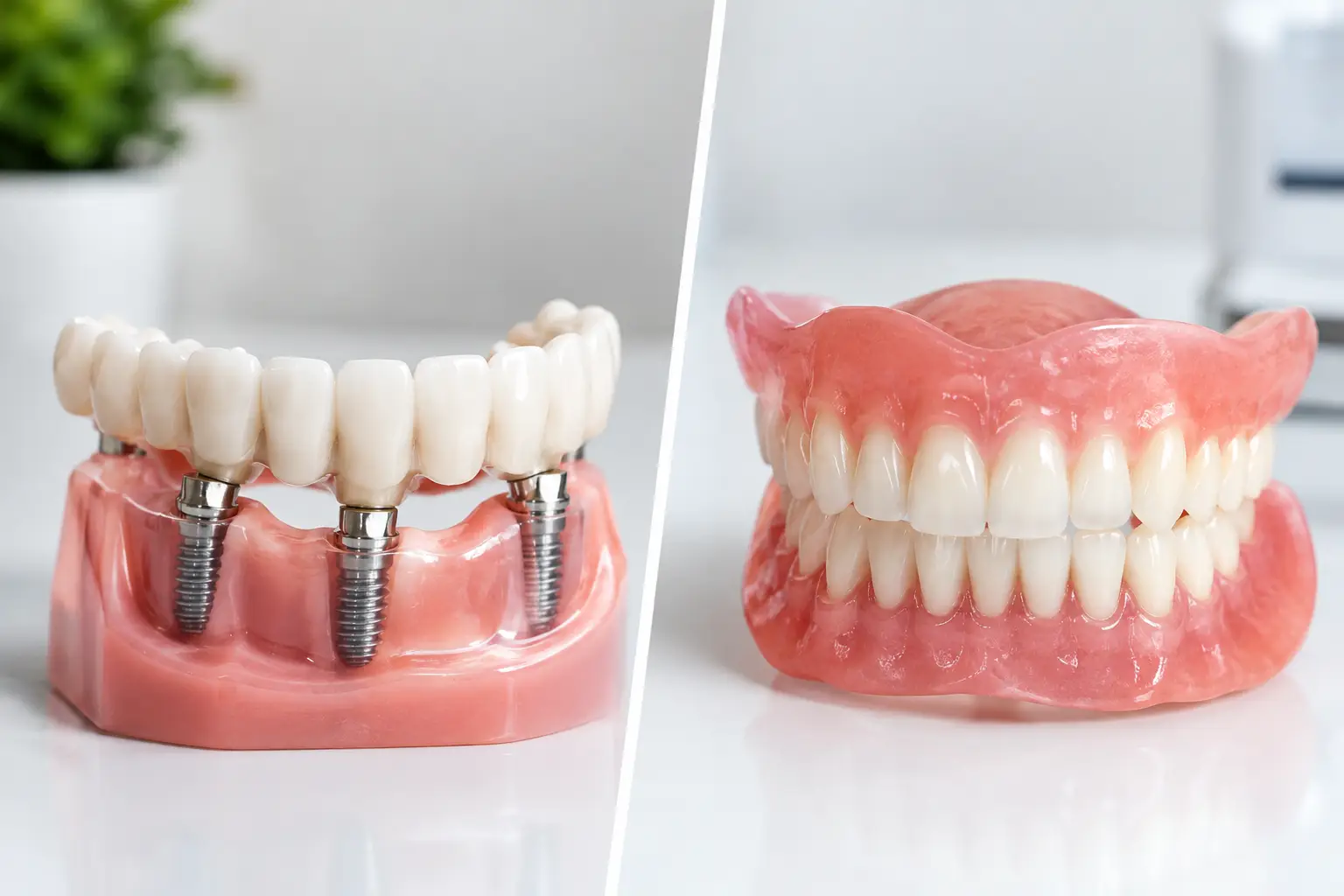
Full dentures replace all teeth in the upper arch, lower arch, or both. They rest on the gums and are shaped to follow the contours of your mouth. Upper dentures typically gain stability from gentle suction against the palate. Lower dentures have less surface area for support and may take more practice to control with the tongue and cheek muscles.
If teeth need to be removed first, an immediate denture may sometimes be placed on the same day as extractions. This allows you to leave with teeth in place while your gums heal. Because gums and bone naturally change shape during healing, immediate dentures commonly need adjustments and may later need to be relined or replaced with a final denture.
Conventional full dentures are made after healing is complete. This approach can provide a more precise fit from the start, although it means discussing how to manage the period between extractions and final denture placement.
Partial dentures
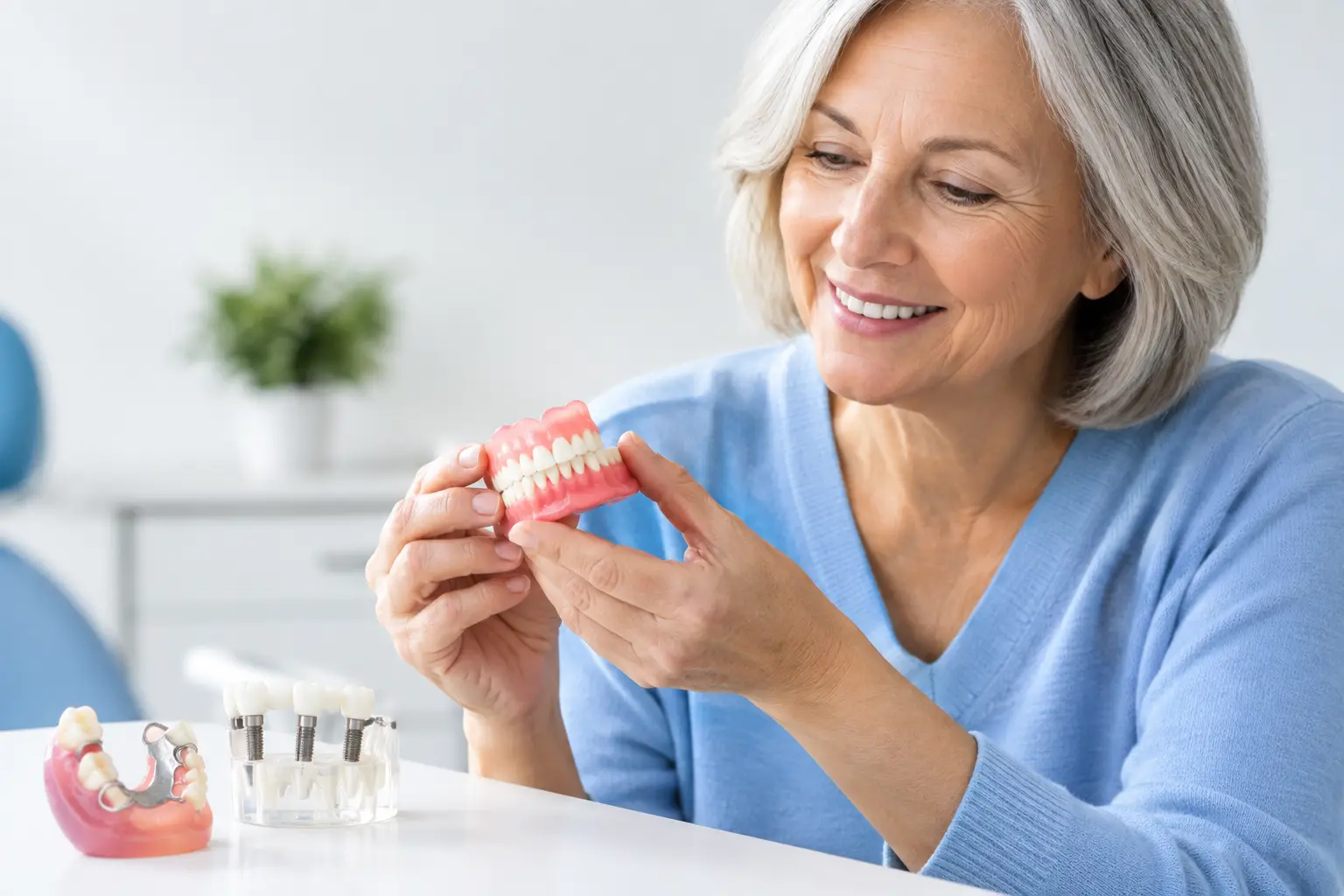
Partial dentures fill gaps when some healthy natural teeth remain. They can replace one tooth or several teeth and are designed to fit around the teeth you still have. Depending on the design, a partial may use discreet clasps, precision attachments, or gum-colored components for support.
A partial denture can be a valuable choice when preserving natural teeth is possible and appropriate. Keeping healthy teeth often helps maintain chewing function and provides support for the appliance. However, the remaining teeth and gums need consistent care. Decay or gum disease around supporting teeth can affect the fit and long-term success of a partial.
Implant-supported dentures
Implant-supported dentures are secured by dental implants placed in the jawbone. Depending on the plan, the denture may snap into place for removal at home or be fixed in place and removed only by the dentist for maintenance.
This option can offer greater stability than a traditional removable denture, especially for the lower jaw. Many patients find that implants reduce movement while speaking and chewing. Implants may also help preserve jawbone by providing stimulation that traditional dentures cannot provide.
Implant treatment involves surgery, healing time, and a higher initial investment, so it is not the right fit for every situation. Bone volume, gum health, medical history, and personal goals all matter. Still, for patients who are frustrated by a loose lower denture or want added security, it is worth discussing.
What New Dentures Feel Like at First
Even a beautifully made denture is new to the mouth, and your muscles need time to adapt. During the first days or weeks, it is common to notice increased saliva, mild sore spots, altered speech, or a feeling that the denture is larger than expected. These changes usually improve as you wear the denture and attend adjustment visits.
It is normal for dentures to require fine-tuning. A small pressure point can become uncomfortable quickly, so do not try to adjust the appliance yourself. Your dentist can smooth or refine the fit without damaging it.
Eating also takes practice. Begin with softer foods cut into small pieces, and chew slowly on both sides of the mouth at the same time. As your confidence grows, you can gradually add more foods. Very sticky, hard, or chewy items may remain challenging with conventional dentures, particularly if the lower denture moves easily.
Reading aloud for a few minutes each day can help your tongue adjust to speaking with dentures. Certain sounds, such as “s” and “f,” may feel different at first, but most people adapt with patience and repetition.
How to Care for Dentures and Your Mouth
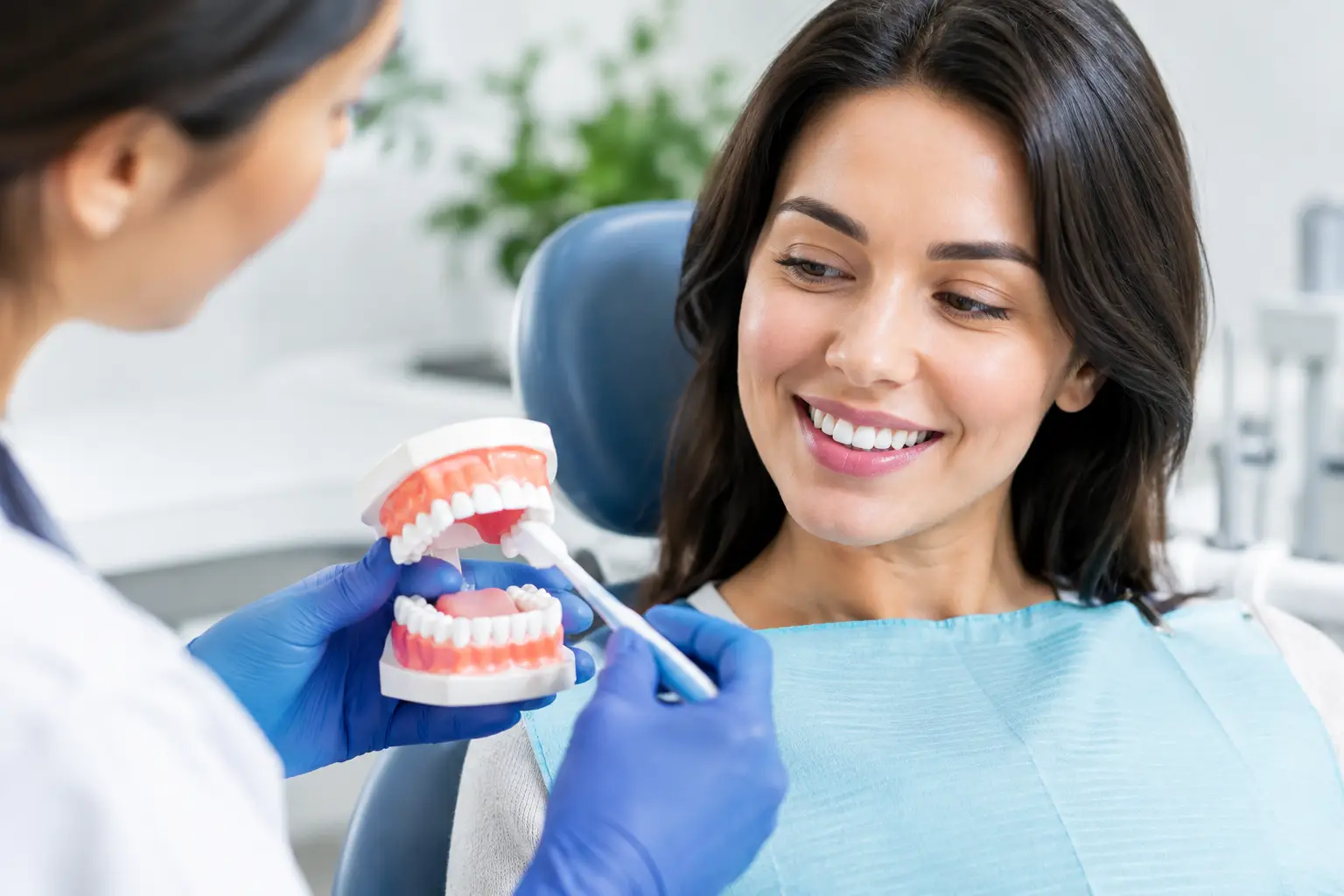
Dentures need daily care, just like natural teeth. Remove them over a folded towel or a sink filled with water, since they can crack if dropped. Brush them every day with a soft denture brush and a cleaner made for dentures. Regular toothpaste can be too abrasive for some materials and may create tiny scratches that hold stains and bacteria.
When dentures are not being worn, keep them moist in water or a denture-soaking solution recommended by your dentist. Never use hot water, which can warp the material. Before placing dentures back in your mouth, rinse them thoroughly.
Your gums, tongue, palate, and any remaining teeth also need attention. Use a soft toothbrush to clean your mouth every day, and brush and floss natural teeth carefully. Removing dentures at night is often recommended to let gum tissues rest, unless your dentist advises otherwise for a specific reason.
Regular dental visits still matter when you wear dentures. Your dentist can check for sore areas, changes in your bite, oral tissue concerns, and the condition of the denture itself. Professional exams are also an opportunity to screen for oral cancer and monitor the health of any remaining teeth or implants.
When a Denture Needs Attention
Dentures do not last forever because your mouth continues to change. Over time, jawbone and gum tissue can shrink, causing a once-comfortable denture to loosen. This may lead to clicking, slipping, sore spots, difficulty chewing, or a change in facial support.
A reline can reshape the inside surface of a denture to better fit your current gums. In other cases, the teeth may be worn, the base may be damaged, or changes in your mouth may mean a new denture is the better choice. Adhesives can provide temporary help for some people, but they should not be used to hide a denture that no longer fits well.
Call your dentist if you have persistent pain, sores that do not heal, a cracked denture, loose implant attachments, or sudden changes in fit. Prompt care is more comfortable than trying to manage a problem at home.
Choosing a Path That Feels Right for You
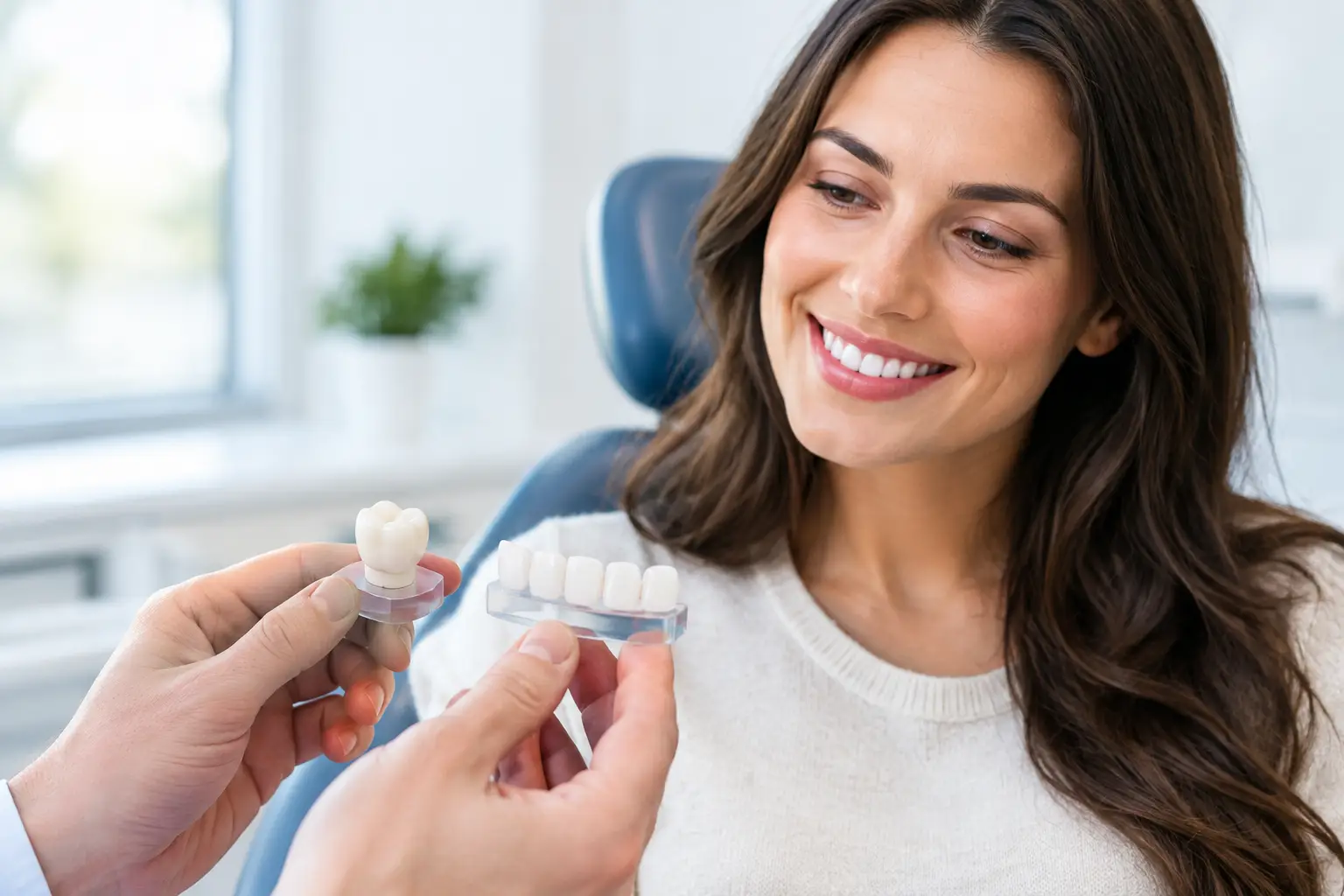
The best replacement for missing teeth should support your health, comfort, appearance, and daily routine. Some patients prioritize the affordability and simplicity of a traditional denture. Others want the added retention of implants. A partial denture may make sense when healthy natural teeth can be preserved, while a bridge or individual implant may be preferable for a smaller gap.
During a consultation, your dentist can review your oral health, take images as needed, and discuss the benefits and limitations of each approach. You deserve straightforward answers about timing, cost, care, and what to expect as you adjust.
Missing teeth do not have to keep you from smiling freely or enjoying meals with the people you love. A comfortable, well-planned denture can be a meaningful step toward feeling more like yourself again.